If you own a kitchen company, Google can be one of your best sources of new enquiries. The problem is that your potential customers are searching for kitchens every day, while your competitors are competing for the same searches. SEO, or search engine optimization is the practice of getting your site to show up as the first search result when people search for a term related to what you do (keyword). For example, when looking for a kitchen company most people type in “kitchen builder in their city” and as a local business that is where you want to show up. The 5 steps you need to take to get to the number-one spot are research, thinking of case studies, writing a skyscraper article, building authority and tracking.
In this article you will find:
- What is SEO for kitchen companies?
- Why is SEO important for kitchen companies?
- The 5 step SEO plan for kitchen companies
- The 3 things Google looks at before ranking your site
- Local SEO
What is SEO for kitchen companies?
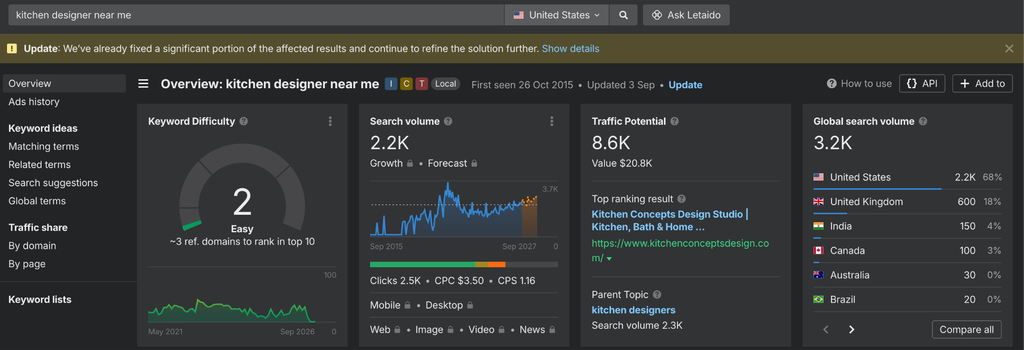
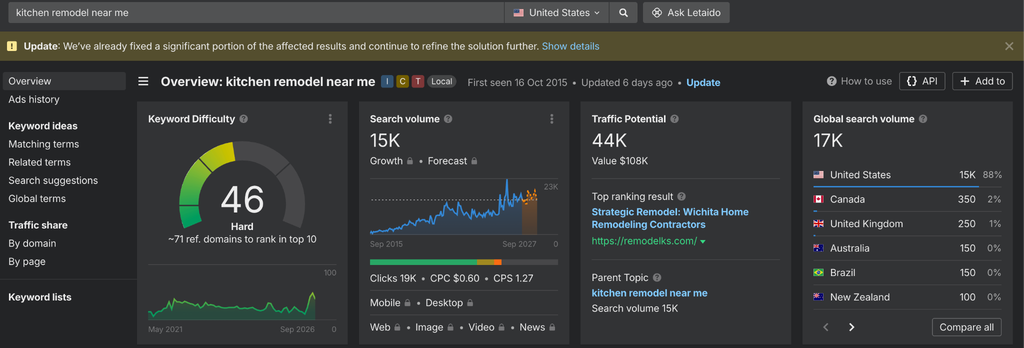
To understand SEO you first need to understand Google’s goals. They want to give THE BEST search experience possible to their users so they keep using their service for search. The purpose of SEO is to get your kitchen businesse’s website to show up as the first result when a potential customer is looking for a specific search term. For local businesses the most useful ones can be “kitchen builder near me”, “bespoke kitchen business in their city”, “kitchen remodeling in their county”, etc. Depending on the area you serve the number of visitors (traffic) you can get will be anywhere from a few hundred to 15 thousand per month. So SEO allows you to capture free traffic already looking for a solution that you offer by answering the questions Google’s visitors are searching for on their platform.
Why is SEO important for kitchen businesses?
People searching for a solution on Google are the people who are most likely to buy right now. They already know the problem they have and what they need to do to fix it so capturing them has the highest conversion rates. This is where SEO comes in. The site that shows up first captures 28.75% of organic visitors and less than 9% of visitors look at the second page on Google. This means that if you do not show up on the first page of Google then no one will ever find you. And even on the first page the first website captures almost a third of all traffic for that search term. So if your site is not ranked, then you are missing out on A LOT of free visitors.
Now yes, you could just buy your way to the top with Google’s Ads. But there are 2 problems with this:
- First is that you need to keep paying for every click. Of course if the numbers make sense then that is not a bad thing and when you are just starting out with SEO it does make a lot of sense. BUT with SEO you can get a lot more visitors without paying for each click.
- Second is that people trust the sites that show up organically more than the sponsored results. Personally I never click on the sponsored posts as they seem less trustworthy to me.
Now I’m not saying you can rely only on SEO to get visitors to your site. SEO is a bit unpredictable and your ranking can change when Google makes updates to their algorithm. But if you do not show up in search results then you will have to spend more on advertising. People don’t buy on the first interaction with your brand and that’s especially true for products with a longer buying process like bespoke kitchens. So you should use SEO as part of your marketing plan but I wouldn’t rely solely on that. As you know, never put all your eggs in one basket.
The 5 step SEO plan for kitchen companies
This is the 5 step plan to get your website listed as the number one search result for your most ideal query:
- Research
Now this step is building the foundation your article will rest on. If you do not know what people are searching for or how your competitors are ranking it’s impossible to reach the first place.
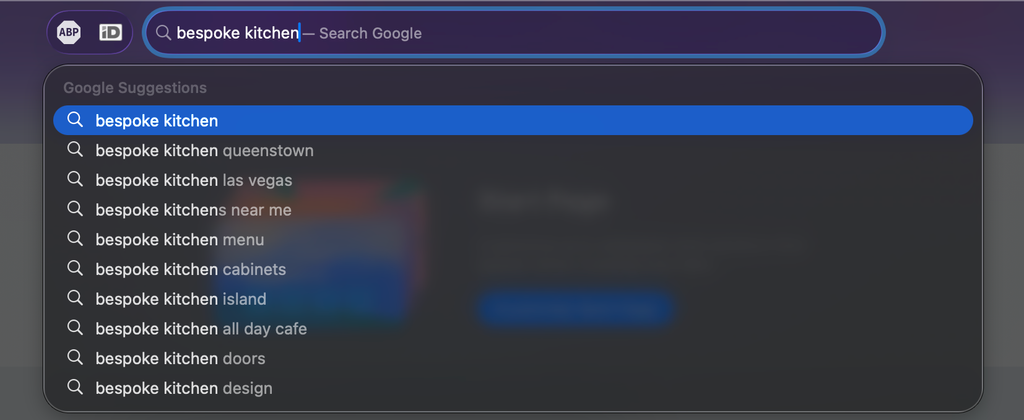
To find out what people are looking for you can look at what Google suggests when typing in your most ideal search terms. For example when I typed in bespoke kitchen, then these were the results:
You can also find what people are searching for at the bottom of a page. In the bespoke kitchen search it showed me these results:
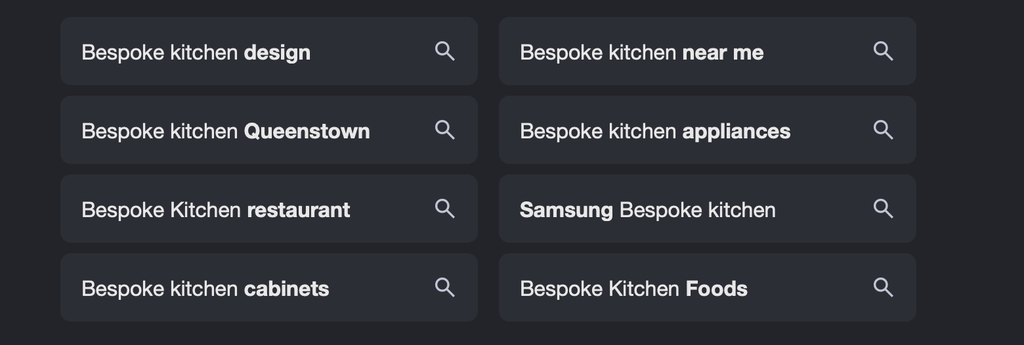
Now let’s say we want to go for “bespoke kitchen near me”, I will click on that and start looking at the pages currently at the top for that search term. What I noticed is that most of them are home pages and not articles. That’s a good thing as we can answer people’s questions more clearly and bring out case studies more naturally.
- Thinking of case studies
Case studies are a great way to show to Google that you are a real business, with real experience. This is especially true in the age of AI. Google has become much better at identifying whether content demonstrates genuine experience and provides something useful beyond what can be generated from existing information. For example if you are writing an article for the query “small kitchen design london” then you can show examples for a small kitchen project you have done in the past.
- Writing a skyscraper article
A skyscraper article is an article that is longer and deeper than the one showing up as the first result. You need to use the search terms you found while researching to answer the questions your most ideal customers are searching for on Google. You should also add in case studies that help the reader better understand the solution.
- Building authority
Building authority is the hardest part of getting your article ranked as the number one spot for your ideal keyword. It is done by getting backlinks from authoritative sites to link back to your article. This is necessary to signal to Google that your article is good and other people think so too. There are three main ways of getting these links:
- The first option is to share your article across your social media profiles. This is unlikely to have the same SEO impact as a genuine backlink from another website, but it can help get your content in front of more people and potentially lead to natural links.
- The second way is by answering people’s questions on forums and having a link back to your article at the end of your answer. For example you could write a reply to this question on Reddit and give them a useful tip:

After which you can add a link to your article.
- And the last and most effective way to build authority is by writing guest posts on other people’s blogs and linking back to your article from those. These are harder to get and you will need to write new articles for their blogs BUT it is well worth it as they give your site and article much more authority than just posting on social media or answering people’s questions on forums.
- Tracking
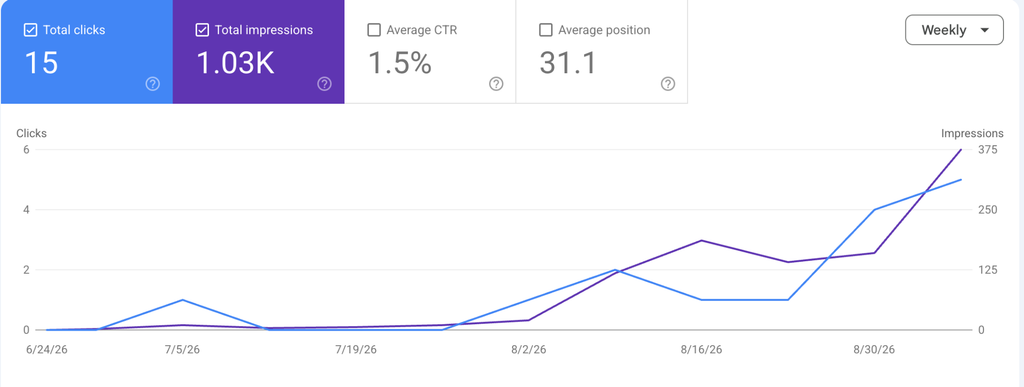
Because SEO takes a long time to start showing its effects you need to look for small signs. If you just started doing SEO don’t expect any big changes for a few months. Just keep grinding and the results will come:
Now sometimes you can have an initial pump but then the results flatline:
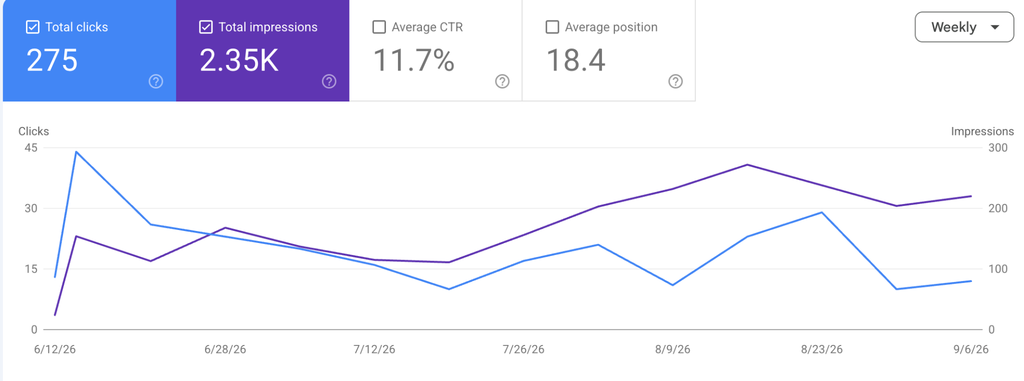
This usually means that the total market you are going after is really small so you should definitely widen either the area you are targeting or the services you try to rank for.
3 things Google looks at before ranking your site
As I said in the beginning Google wants to offer the best search experience possible to their users and to do that they have built up rules that govern how they rank pages. These are the 3 parts that you should 100% know:
- The quality framework: E-E-A-T
This is Google’s quality system used to evaluate the quality and credibility of content. It looks at 4 things:
- Experience – have you actually done this?
- Expertise – do you demonstrate knowledge on this subject?
- Authoritativeness – is your site or author recognized as a credible source
- Trustworthiness – can users trust the information and business behind it
- Core technical and on page requirements
These are the more technical things Google looks for:
- Relevance & Search Intent – Matching content directly to what the user is looking for.
- Technical Health – Fast loading speeds, mobile-friendliness, secure connection (HTTPS), and clean indexability.
- Core Web Vitals – User experience metrics measuring page load speed, visual stability, and interactivity.
- Backlinks & Off-Page – High-quality links from reputable, contextual sites that pass authority.
- Content Quality & Originality – Unique insights, clear structure, and helpful details that avoid duplicate text or thin content.
- Primary policies
Google penalises sites that break these policies and try to game the system:
- No Cloaking or Sneaky Redirects – Showing different content to search engines than to real users.
- No Scaled Low-Quality Content – Generating automated, unedited AI content or mass-producing thin pages for search traffic alone.
- No Link Spam – Buying, selling, or exchanging unnatural links to manipulate ranking scores.
- No Keyword Stuffing – Overloading text with repetitive keywords instead of writing naturally.
If you follow the points in part 1 and 2, and avoid the spammy activities in part 3 then your site has a good chance of ranking in the number-one spot for your most ideal search term.
Local SEO
If you are a kitchen company that serves a specific area, local SEO is extremely important. You want to show up when someone searches for terms like “bespoke kitchens London” or “kitchen designers near me”.
The first thing you should optimize is your Google Business Profile. Make sure your business information, services, categories and opening hours are accurate, and regularly add photos of your completed projects. You should also actively collect genuine reviews from happy customers.
Your website should also clearly show where you operate. If you serve London, for example, you could create useful pages for the different areas you work in, such as “Bespoke Kitchens in Richmond” or “Bespoke Kitchens in Surrey”. Just make sure each page provides genuinely useful and unique information rather than simply changing the location name.
Finally, use your completed projects as local content. A case study about a kitchen you installed in Richmond can help demonstrate both your expertise and the areas you actually serve.
Conclusion
SEO is not as complicated as many people make it seem but like with all good things it does take time to get results. Also relying purely on SEO can be a bit unreliable and that’s why I recommend having a complete marketing system in place so you can consistently get qualified leads and turn them into customers.
If you need SEO services for kitchen and bath companies or just want to get more qualified leads you can contact me here: https://leadrescuer.kitchen/contact/
PS: Just start by writing one article today. It will get easier with each article:)
Frequently asked questions
1. What is SEO for kitchen companies?
SEO for kitchen companies is the process of improving your website so it appears higher in Google when potential customers search for kitchen-related services. This can include keyword research, creating useful content, local SEO, building authority and improving your website.
2. Why is SEO important for kitchen companies?
SEO can help kitchen companies get in front of people who are already searching for their services. Unlike paid advertising, you do not have to pay for every click, making SEO a potential long-term source of qualified website visitors and enquiries.
3. How long does SEO take for a kitchen company?
SEO usually takes several months before you start seeing significant results. The exact timeframe depends on factors such as your competition, website authority, location and the search terms you are targeting.
4. What keywords should a kitchen company target?
You should target keywords that your ideal customers actually search for and that relate to the services and areas you serve. Examples include “bespoke kitchens London”, “kitchen designers near me” and “kitchen fitters Manchester”.
5. Is local SEO important for kitchen companies?
Yes. Most kitchen companies serve a specific geographic area, so ranking for local searches can be extremely valuable. Optimising your Google Business Profile, collecting reviews and creating useful location-specific content can all help improve your local visibility.
6. How can a kitchen company build backlinks?
You can build backlinks by creating useful content that other websites want to reference, contributing guest posts to relevant websites, getting listed on reputable industry directories and earning links from local or industry publications.
7. Should kitchen companies use SEO or Google Ads?
Ideally, you should use both. Google Ads can generate traffic immediately, while SEO can build a long-term source of organic traffic. Using multiple channels also means you are not completely dependent on one source of leads.
8. Can a kitchen company do SEO themselves?
Yes. A kitchen company can handle many aspects of SEO themselves, especially keyword research, creating content, optimising their Google Business Profile and producing case studies. The more technical or competitive parts of SEO may require specialist knowledge.