Most interior design firms have the same marketing problem: they only market to people who are ready to buy. Their websites, Instagram accounts and even their paid ads are filled with beautiful finished projects. And while you should absolutely showcase your work, that’s only one part of a successful marketing strategy. The problem is that every other interior design firm is doing exactly the same thing, which makes it incredibly difficult to stand out.
A complete marketing strategy for interior design firms needs to do much more than display a portfolio. It should attract new people, capture their interest and gradually turn them into paying clients. When you build that system, you stop relying on referrals and unpredictable enquiries, and your business becomes much more consistent.
What does a good marketing strategy look like?
A good interior design marketing strategy consists of three simple stages:
- Get people to discover your brand
- Capture their contact details
- Turn those contacts into customers
Think of it as a simple funnel:
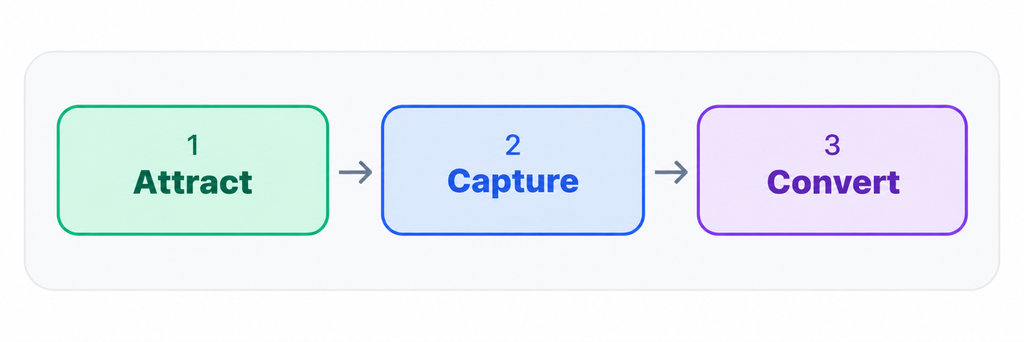
The first stage is all about visibility. This includes social media, SEO, articles and paid advertising. The second stage focuses on turning visitors into leads through landing pages and lead magnets. The final stage is where you build trust through follow-up emails, case studies and personal conversations until the prospect is ready to hire you.
- Create wide and deep content
Most interior design firms only create what I call deep content. These are finished projects, before-and-after photos and portfolio pieces that appeal to people who are already thinking about hiring an interior designer. Deep content is essential because it helps prospects decide whether they like your style, but it rarely reaches many new people.
Wide content is different. It’s broader, easier to consume and designed to attract people who aren’t actively shopping for your services yet. Instead of showcasing another completed living room, you might explain why Scandinavian homes feel so calming, show three mistakes that make a room feel smaller or take people behind the scenes of your design process.
The goal isn’t to replace your portfolio. It’s to use wide content to grow your audience and deep content to convert that audience into clients.
- Don’t try to sell on social media
One of the biggest mistakes I see in interior design marketing is treating every social media post like an advertisement. Think about your own behaviour for a second. You don’t open Instagram hoping to watch businesses promote themselves, you open it to be entertained, inspired or learn something interesting.
Your potential customers behave exactly the same way. If every post says “Here’s our latest project, contact us today,” there is very little reason for someone to engage with it unless they’re already ready to buy.
Instead, tell stories. Explain design decisions, show renovation mistakes, film behind-the-scenes moments or share interesting observations about homes. The more attention you earn naturally, the more people will remember your brand when they eventually need an interior designer.
- Make sure you show up on Google
Social media creates awareness, but Google captures demand. Someone searching for “interior designer Tallinn” is showing much stronger buying intent than someone casually scrolling through Instagram.
That’s why every marketing plan for interior design firms should include SEO. Create dedicated pages for the services and locations you want to rank for, such as residential interior design, commercial interiors or interior designer in your city. Rather than stuffing keywords onto the page, answer the questions your potential clients actually have.
Explain your process, pricing factors, timelines, who you work with, include testimonials and showcase relevant projects. Your objective isn’t just to rank higher, it’s to convince the visitor that you’re the right company to contact.
- Show up in AI searches
Search behaviour is changing quickly. According to Search Engine Land, 37% of consumers now start searches with AI tools instead of Google, making AI visibility increasingly important for service businesses.
The easiest way to increase your chances of being mentioned is to write articles that answer the exact questions people ask during consultations. Topics like “How much does an interior designer cost?”, “Is hiring an interior designer worth it?” and “How long does an interior design project take?” are perfect examples.
Keep your articles easy to read. Put the answer near the beginning of each section, then explain it in more detail. This format works well for both readers and AI systems trying to understand your content.
And don’t ignore AI just because it sends less traffic today. Ahrefs found that while only 0.5% of their traffic came from AI searches, it generated 12.1% of their sign-ups a remarkably high conversion rate.
Pro tip: Think about the questions clients ask you every week. Those questions are usually your next 20 blog articles.
- Make ads that don’t look like ads
The biggest advertising mistake most design companies make is producing ads that look too polished. I know it sounds backwards, you want to show beautiful interiors but overly commercial creative is often the easiest thing for people to ignore.
Instead, make your ads feel like organic content. A designer speaking directly to the camera, a renovation story, a quick before-and-after or a surprising design mistake will often outperform a perfectly edited showroom montage because it feels native to the platform.
In one of our campaigns, this approach generated over 800 likes while reaching tens of thousands of potential customers.
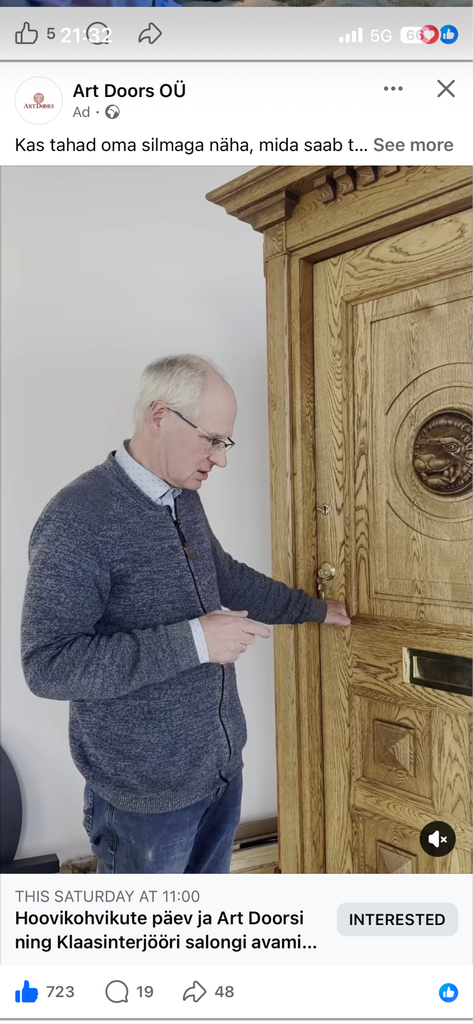
The takeaway isn’t that every ad needs hundreds of likes. It’s that your ad needs to earn attention before it asks for the sale.
- Send people to specific landing pages
A landing page is the page someone arrives on after clicking your ad. Surprisingly, most companies still send paid traffic to their homepage, and that’s where they lose a huge percentage of potential customers.
Imagine someone clicks an ad about renovating their family home. If they land on a generic homepage talking about your company history, they’re forced to figure out whether you can solve their problem. Most people won’t, they’ll leave.
Instead, create landing pages that perfectly match the message of the ad. If the ad is about apartment design, the landing page should be about apartment design. If it’s about luxury renovations, continue that exact conversation. Consistency dramatically improves conversion rates because the visitor never has to wonder if they’re in the right place.
- Create a lead magnet
The more expensive your service is, the longer the buying process usually becomes. Most people won’t hire an interior designer the first time they discover your business, which is exactly why lead magnets are so effective.
A lead magnet is simply a valuable resource you give away for free in exchange for someone’s contact details. It solves a small problem while introducing people to your brand.
Good examples include:
- 7 Biggest Mistakes When Designing Your Dream Home
- 108 Modern Home Ideas
- The Ultimate Home Renovation Checklist
- A Home Layout Planning Tool
Test a few different ideas and see which one your audience responds to best. Once someone downloads it, you’ve started a relationship instead of hoping they remember your Instagram account six months later.
- Contact your leads ASAP
Most businesses assume that interested people will contact them again when they’re ready. In reality, the opposite is usually true. When someone fills in your form or downloads your guide, they’re often comparing several companies at the same time.
According to sales data shared by Alex Hormozi, contacting a lead within 60 seconds can increase sales by 391% compared to delayed follow-up. While the exact number will vary by business, the underlying principle is incredibly important: speed wins.
Don’t call to pressure people into buying. Call to understand where they are in the process. Ask what they’re renovating, when they’re planning to start and what challenges they’re facing. Even if they aren’t ready today, you’ve begun building trust while your company is still fresh in their mind.
The fastest company often wins not because they’re better, but because they’re remembered.
- Automate your emails
Your email list is one of the few marketing channels you actually own. Algorithms change, social media reach drops and advertising costs rise, but nobody can take away permission-based email subscribers.
Most interior design firms never use this advantage. They collect leads and then send nothing. Instead, build an automated sequence that delivers genuinely useful content over several months: design tips, case studies, before-and-after projects, renovation advice and answers to common questions.
The purpose isn’t to constantly sell. It’s to stay relevant while your prospect gradually moves closer to making a decision. When they finally decide to hire an interior designer, your company is already the one they know.
How to turn this into a marketing plan
These nine strategies become much more powerful when they work together instead of independently. A simple marketing plan for an interior design firm looks like this:
Step 1: Attract attention
Use wide social media content, SEO, educational articles and paid advertising to get in front of people before they need your services.
Step 2: Capture leads
Send visitors to dedicated landing pages and offer valuable lead magnets so they become contacts instead of anonymous website visitors.
Step 3: Build trust
Follow up quickly, automate your emails and continue educating prospects with useful content until they’re ready to buy.
Rather than measuring likes and followers, track the numbers that actually matter: leads generated, consultation bookings, conversion rate and revenue. Those are the metrics that tell you whether your marketing is growing your business.
Conclusion
Your portfolio is important, but your portfolio is not your marketing strategy. If all you do is post finished projects, you’ll only speak to the small percentage of people who are already looking for an interior designer.
The firms that grow consistently attract people earlier, capture their contact details and stay in touch until they’re ready to buy. That’s the difference between unpredictable enquiries and a reliable client acquisition system.
These are the exact marketing strategies for interior design firms we use with our clients to help them build a predictable flow of leads. If you’d like help creating that system, contact us here.
PS: Go get those clients:)