To market a kitchen business you should always use the three legged strategy of combining SEO/AEO with social media content creation and pay per click ads. This way we can hit the entire buyer’s pyramid.
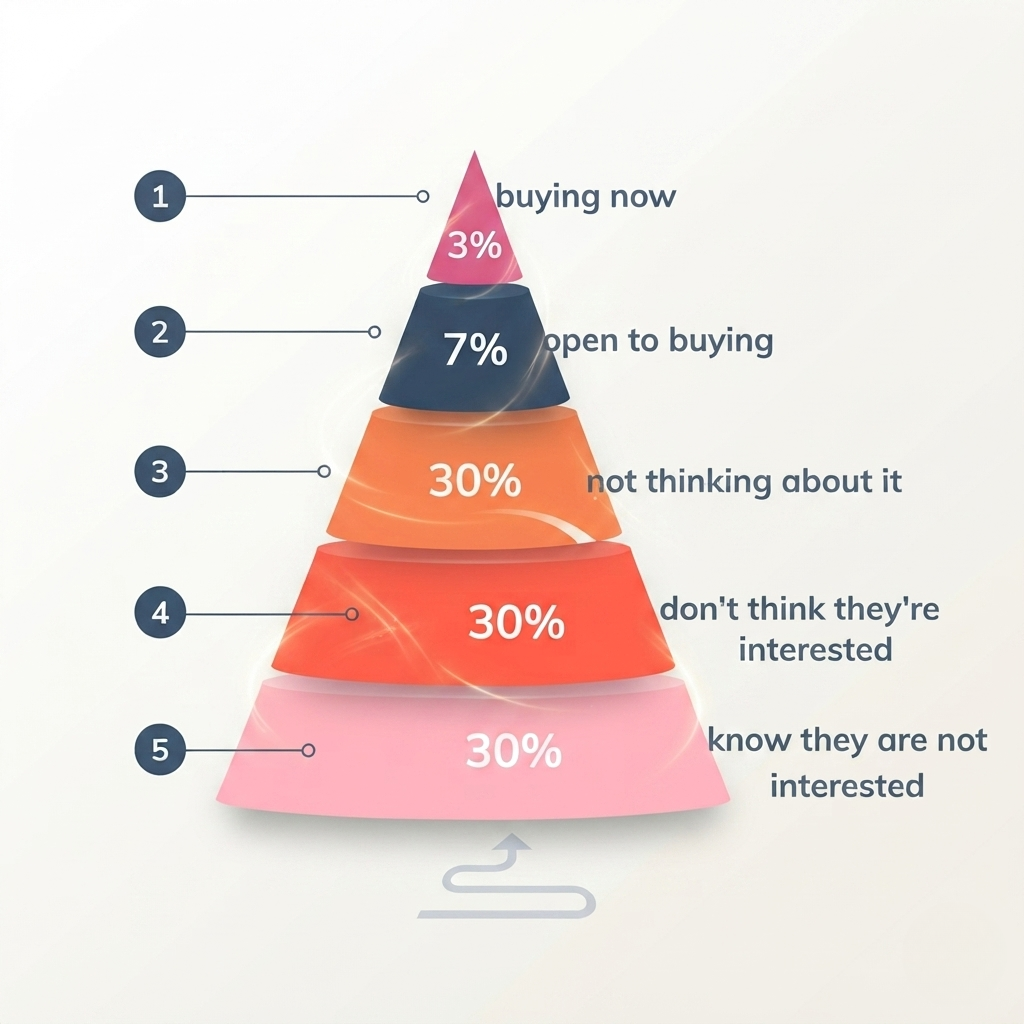
SEO (search engine optimization) and AEO (answer engine optimization), are meant to bring people who are actively looking and people who are considering options (level 1 and 2) to your site. These people are the closest to making a decision.
Pay per click or PPC kitchen companies are meant for targeting the people who are problem aware but not thinking about it and the people who don’t think they are interested (levels 3 and 4).
Social media is important for kitchen builders, because it helps to build up trust and show you to a wider audience. Most people are not looking to buy a kitchen today but they might be interested in a year or two. By creating social media content you get to reach even the people who don’t think they are going to buy (level 5).
SEO and AEO strategy for kitchen designers
As a kitchen company, showing up when people are Googling kitchens in your area is vital for two reasons. Firstly, by showing up on the first page of Google they will trust your brand a LOT more. Secondly, you need to rank on Google to be able to be discoverable by AI searches. That’s where AEO or answer engine optimization comes in. This strategy has one BIG downside. It takes 3-12 months for the effect to kick in. But once it does you’ll start getting a lot of queries from people actively looking to buy.
SEO for kitchen companies means writing blogs and service pages that are optimized for what people are Googling. You can find out by entering “your city kitchen design” or “your city kitchen builder” into Google and then looking at what other searches it recommends. Those are the ones you should target as people are already typing them into Google. Just answer their questions as well as you can and Google will think of you as an expert and show you to more people.
SEO is also becoming increasingly important for AI search. Studies have found a significant overlap between the websites that rank in Google and the sources used in AI-generated search results, with one study finding an overlap of around 76%. This means that investing in SEO can help your kitchen business become more visible not only in traditional search, but also in AI-powered search.
AEO for kitchen companies means that you need to make your site easily skimmable. AI searches are looking at sites like most humans are. They are skimming and trying to find the answer as fast as possible. That’s why you should always start each section with the answer and then you can go deeper in the next paragraphs. Also adding an FAQ to your pages helps AI searches find answers more quickly so I do recommend adding those as well.
Social media for kitchen companies
For a kitchen company it is vital to be on social media. That’s because it’s one of the cheapest places for you to reach a cold audience and grow their trust in your brand. But social media IS NOT for selling. If you try to sell on social media you will never grow because people hate ads. Building a large following will help make people who might be thinking about getting a kitchen aware of your brand. If you provide a lot of value for them in the form of education or entertainment, they will naturally start trusting your brand. That way once they are ready to buy they will come to you. For this strategy you want to create both wide and deep content.
Wide content is the stuff that will go viral. It will get you the most views and follows. That way you can reach a huge audience. The topics you should cover are history, customs, interesting facts and how things are made. Of course you can add topics if you have more ideas but these are the basics. Pretty much you are just trying to create content that people want to watch.
Deep content is more product centric. It is aimed at the people in your audience who are actively looking to buy a kitchen. This content will get almost no views and interactions BUT it will generate leads for you.
The best analogy I have for this strategy is this. If you go fishing with a rod, you will catch some fish but if you go fishing with a net you will get a LOT more of everything. Yes, there will also be trash you don’t want in your net but the overall amount of fish will be a lot greater than when you just fish with a rod.
PPC for kitchen designers
PPC or pay per click ads are great for reaching people who are problem aware but don’t know your brand. There are a few platforms you can place them on but the most popular are Google and Meta. The purpose of PPC for kitchen companies is to get people to come to your site.
Google ads usually cost more per click because the people searching on Google are actively looking to buy a kitchen. That means they are worth more to companies. Creating a Google search ad is a lot easier than creating Meta ads but you still need to write a good copy to get people to click on the link.
Typically Meta ads have a lower cost per click as you are targeting a colder audience but the ads need to speak to people who might not be looking to buy a kitchen yet. Otherwise you will only be targeting the 3% that are actively looking to buy and your cost per metric will be a LOT higher. For Meta ads I recommend creating 1-2 long copies, 8-16 creatives (they can be static images) and 5 headlines. That way Meta can test which combos work best for your audience. The ads themselves need to look like organic content, otherwise people will scroll past them.
Top marketing platforms for kitchen design companies
So what are the most effective digital marketing channels for custom kitchen designers? The short list is:
- Facebook – for trust and targeting
- Instagram – to show your work and reach cold audiences
- Youtube – build trust by teaching
- Pinterest – show your work
- Google search – target the people who are closest to buying
- AI searches – target the people who are gathering information
As you can see the answer depends on the clients you are targeting. Social media sites like Facebook and Instagram are great for reaching people who are not yet ready to buy or even thinking about it. Youtube is the best one to target the people who are in information gathering mode. And Google and AI searches are better for targeting people who are already thinking about getting a new kitchen or even actively looking for a kitchen builder.
I recommend creating content for colder traffic (people who haven’t seen your brand before), because that brings your pay per click marketing costs way down. The more people have seen your brand on their feed, the more they trust you.
Frequently Asked Questions
What is the best way to market a kitchen business?
The best way to market a kitchen business is to combine SEO and AEO, social media content, and paid advertising. SEO and Google Ads help capture people who are already searching for kitchen solutions, while social media and Meta Ads help build awareness with people who may become customers in the future.
How do kitchen companies get more customers?
Kitchen companies can get more customers by combining high-intent marketing with long-term brand building. Google Search Ads and SEO can attract people actively looking for a kitchen company, while social media, YouTube and Meta Ads can introduce the business to potential customers before they are ready to buy.
Is SEO worth it for a kitchen company?
Yes. SEO can be particularly valuable for kitchen companies because people often spend considerable time researching kitchens, materials, prices and designers before making a purchase. Ranking for these searches allows a kitchen company to attract potential customers without paying for every click. The downside is that SEO usually takes several months to produce meaningful results.
What is AEO for kitchen companies?
AEO, or answer engine optimization, is the process of structuring and writing website content so that search engines and AI-powered search systems can easily understand and extract useful answers. For a kitchen company, this means clearly answering questions about kitchen design, pricing, materials, layouts, renovations and the buying process.
Should a kitchen company use social media?
Yes. Social media is useful for kitchen companies because it allows them to build awareness and trust before potential customers are ready to buy. Platforms such as Instagram, Facebook, YouTube and Pinterest can be used to showcase projects, educate potential customers and reach people who may need a kitchen months or years in the future.
What should a kitchen company post on social media?
Kitchen companies should create both broad and product-focused content. Broad content can include interesting facts, design ideas, manufacturing processes, transformations and educational or entertaining topics. Product-focused content can cover kitchen layouts, materials, storage solutions, project walkthroughs, pricing and common mistakes.
Should kitchen companies advertise on Google or Meta?
Ideally, kitchen companies should use both Google and Meta because they serve different purposes. Google Ads are effective for capturing existing demand from people actively searching for kitchen companies and solutions. Meta Ads are useful for reaching colder audiences who may not be actively searching yet.
What is the Buyer’s Pyramid in marketing?
The Buyer’s Pyramid is a marketing framework associated with Chet Holmes that divides a market according to how ready people are to buy. It highlights that only a small portion of a market is actively looking to buy at any given time, while a much larger group may be interested in the future or not currently thinking about the product. For kitchen companies, this explains why marketing should target both people who are ready to buy and people who may become buyers later.